Why do people get hurt in churches that genuinely care?
Almost never for lack of compassion. Usually because care was never given the definition, the systems, or the training the church gives everything else it takes seriously.
The Definition Gap
We define pastoral care too narrowly — as a job description for a few people, rather than a category of care the whole church provides.
The SAFE Framework →The Systems Gap
Our systems can’t carry our compassion. Texts, DMs, spreadsheets, lobby conversations, and one person’s memory are not a care system.
SafeOS & Guided Implementation →The Equipping Gap
The people providing most of the care were never given the tools — the language, the boundaries, the referral pathways — to carry it well.
The Playbook & Certification →Safe & Sound exists to close the gaps between a church’s intention to care and its ability to deliver that care well.
Psychologically informed. Theologically grounded.
Psychology helps us understand dimensions of human experience. Theology tells us who people are and what formation is for. Ministry is where faithful care actually happens.
Safe & Sound advances psychologically informed ministry — pastoral care responsibly informed by psychological understanding, while theology remains governing.
Understand care.
See. Assess. Form. Equip.
SAFE is how we practice psychologically informed ministry — four movements of pastoral care that run through the whole life of a church: to see people before their problems, discern what they carry, form them toward Christ, and equip them for the life and mission of the Church.
See
Perceive the person before the problem.
Assess
Understand what people carry — and what their formation actually needs.
Form
Build the environments where change becomes possible.
Equip
Send people back into life and mission, whole.
Build care.
Good care needs more than good intentions.
Compassion has to travel through something. A care system is the infrastructure underneath it — intake, triage, assignment, follow-up, escalation, referral, and the way people are handed on into discipleship rather than dropped.
SafeOS
The care operating layer for the local church. Where care is actually held, tracked, and carried — instead of living in texts, spreadsheets, and memory.
Explore SafeOS →Guided Implementation
We work directly with your leadership to design and implement intake, triage, ownership, escalation, referral, follow-up, records, roles, and SafeOS workflow inside your context.
Explore Guided Implementation →Equip people.
Most of the care in your church is given by people never trained to give it.
Small-group leaders, care leaders, ministry leaders, and volunteers meet complex human situations every week. The Playbook is the methodology they practise. Certification qualifies the leaders who go further and facilitate it with others.
The Playbook
The methodology leaders use while they are actually caring for someone — conversation tools, decision frameworks, boundaries, and referral guidance. Built to be worked through with a team.
Get the Playbook →Certification
For leaders who want to facilitate the Playbook with others. Self-paced training, real scenarios, and a final competency assessment. The Playbook is included.
Explore Certification →Not sure which gap is yours?
Take the free five-minute SAFE Church Assessment. You’ll get your SAFE Church Score, a four-dimension profile, your greatest care vulnerabilities, and where to begin.
Take the free assessment →
Why I started Safe & Sound
For years I watched people sincerely love Jesus while quietly carrying anxiety, shame, grief, trauma, and questions they didn’t know how to bring into church. Many were taught what to believe. Far fewer were shown how God meets us in the realities of being human.
The longer I served as a pastor, the more convinced I became that discipleship wasn’t simply about learning more information. It was about becoming a different kind of person.
Eventually I realized the church needed a more psychologically informed way of ministering to people — not a softer gospel, but a wiser, more faithful practice of forming them.
— Paul
Paul Miller is a lead pastor in Atlanta, GA, with a BA in psychology and an MA in theology. His Doctor of Ministry research at Fuller Theological Seminary is developing and evaluating the SAFE Framework as a psychologically informed pastoral-care framework for church health — work that sits at the intersection of ministry practice, theology, and psychological understanding.
The safest place to tell the truth should be the church. We exist to help it become one.
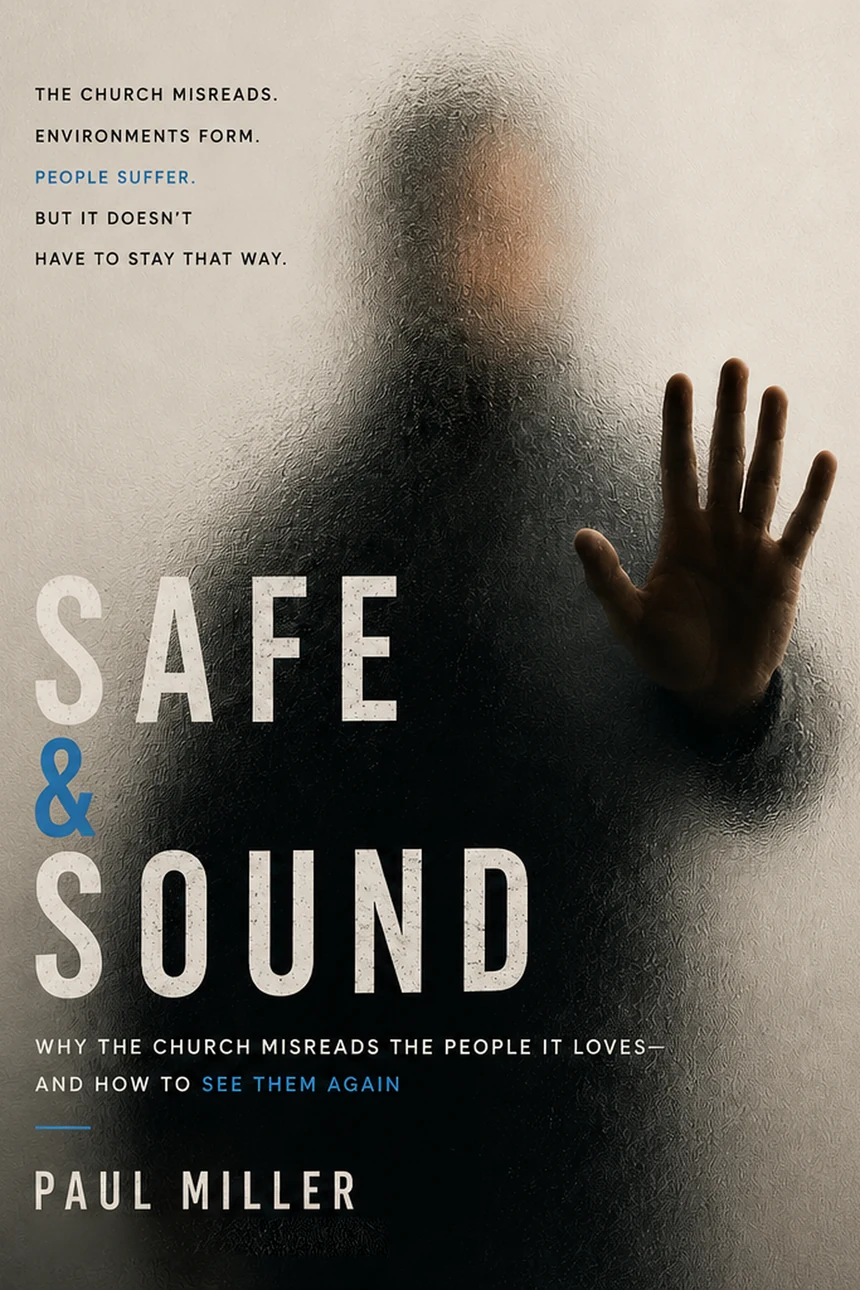
The book makes the case. The rest is what we built because of it.
The book explores why people can be hurt even in churches that care, and develops the theological and human argument beneath Safe & Sound. Everything else on this site answers the next question: what do we build because this is true?